



Reading time: 4 minutes 31 seconds
K just clipped her first dahlias of the season from her garden in B City. They’re her favorite flower, because she’s a human being with eyeballs and a beating heart.
She’s also a creative leader that’s been job hunting for a while, with no sign yet of person-role fit.
However, last week:
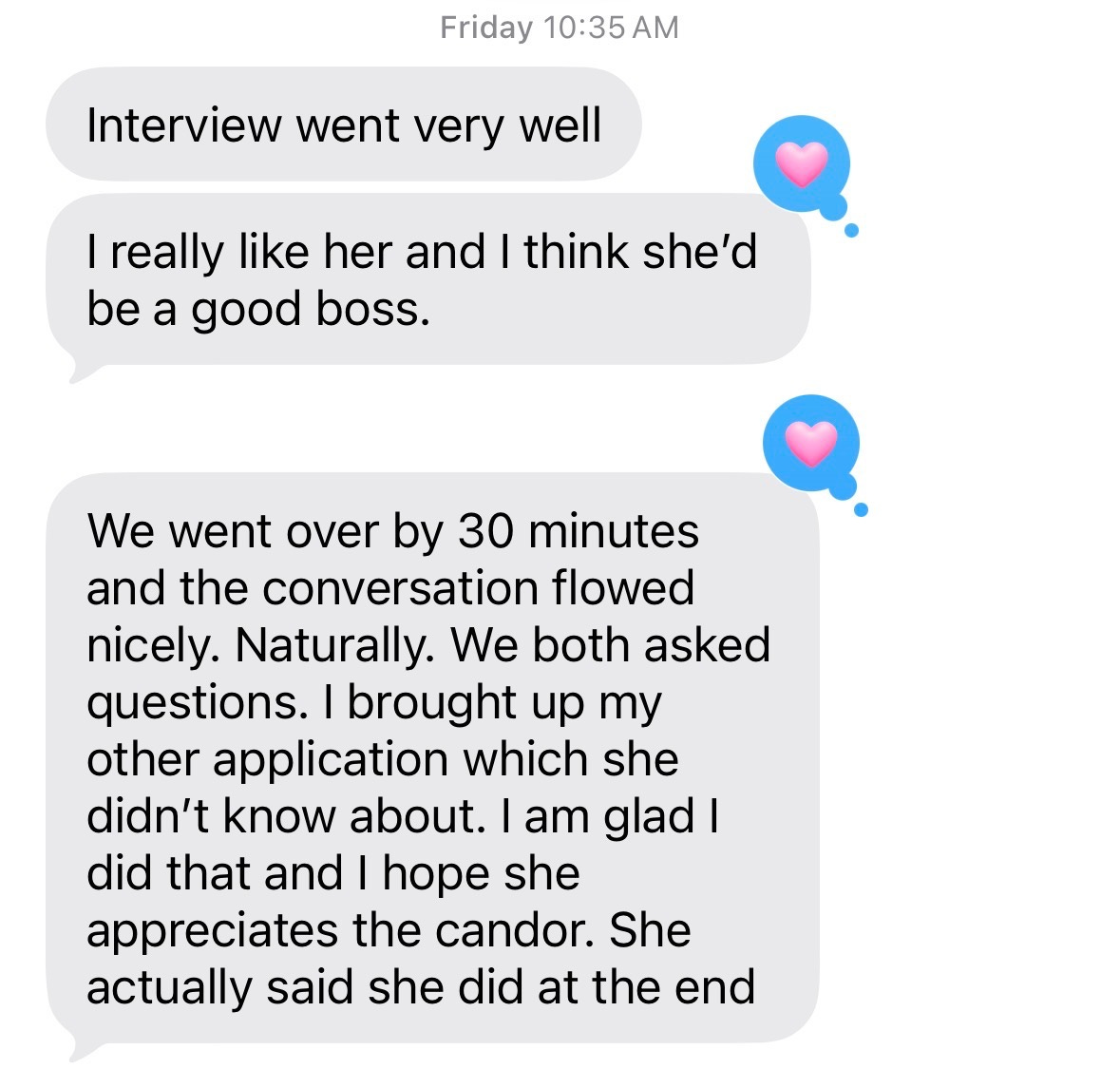
She asked these 8 questions
Context: Her would-be manager previously played the role1 she’s interviewing for.
How does the team interface with the [company name] ecosystem?
How is the creative team perceived by other groups within [parent division that creative is part of]?
Upon leaving your role as the creative director, what are you most worried about? Least worried about?
What are the two biggest headwinds you face right now?
What’s most important to you about the work that comes out of this team?
What does the team need most right now?
What do you think I need to be successful in this role?
Given our conversation today, would you recommend that I move forward in this process. If not, why? as I’d love to address your concerns.
But there’s way more to it than that
There are many reasons this interview went well.
A lot of them were out of K’s control: the personality traits of the hiring manager, whether the actual scope of the role2 was in her wheelhouse or not, whether they already decided to hire from within and this interview is a waste of her time, etc.
Regardless, she prepared expertly, locking in the parts that are in her control:
she is beyond qualified for the role. In fact, she would probably level-up her team and entire creative department if given this chance
she reviewed her experience and POV, then crafted a powerful narrative of herself as a creative leader
she’s been building her personal brand — chose resonant social platforms for her passions and talents, hired design help to create a visual identity, and has been consistently sharing clear, personal, inviting content.
she happened to know someone at the company, and was thoughtful about how to contact them with her interest
she had interviewed at the same company for a different role, some time ago3
The big picture we lose sight of constantly
Now what? We’ll see.
I know this sounds strange, but as her coach, I won’t be fussed if she doesn’t get an offer. Getting “chosen” would be thrilling, and to be hired would change her and her family’s life in a big way. But on another level, it almost doesn’t matter.
Whether or not you get hired has absolutely nothing to do with your value or worth as a person.
I’ve seen a lot of qualified and overqualified clients not receive an offer. After five fucking interview rounds, when they’d be absolutely perfect for the role.
I’ve talked to hiring managers as to why they made their choices. Most of them can’t break it down past “We just decided to go in a different direction.” The ones I have relationships with tell me the truth. And a lot of it is random and out of control, you guys.
My resounding wish is for you to stop tying your self-worth to an application process.
Read my footnotes. Think about how much K poured into this. She’s not the same person as before. And yet!
K loves gardening. She loves eating ice cream with her husband. She’s adjusting to her kids’ teenage behaviors. She loves going on walk-and-talks with friends. She enjoys a good colorway. She wants her working hours to chip away at something that matters — a disease, social ill.
Nothing about her core essence changes if she doesn’t get this job.
What’s your craziest job search story? What’s the mild middle sound like? ❖
I’m reading a “marketing classic” in August

Personal branding, positioning, and niche are a big chunk of my practice. I spend a lot of time helping spin up authentic, chord-striking personal brands with people who are too smart for their own good.
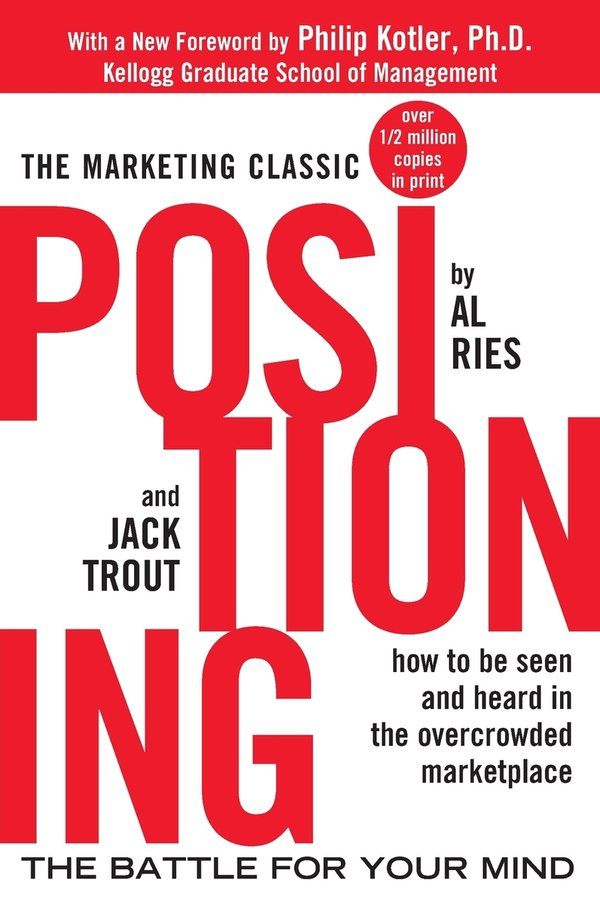
Positioning: The Battle for Your Mind by Al Ries and Jack Trout (2001) is supposedly the first book to talk about how to get and hold attention in the digital age.
Ries and Trout are overconfident in a way that is disorienting — because they are not oriented to us. 1990s Madison Avenue swashbuckling. Anyway, I am reading it! It’s an easy read, not long.
I think reading the classic or cult classic of a field is always a good idea. I wonder what’s evergreen about personal branding? What have we forgotten in the AI era?
Do you want to join me? I hear from a lot of you wondering how to position yourself, wanting to level-up your personal brand, niche, positioning to be research-backed rather than simply intuitive.
Oh and if people want to, we can make it a “workshop book club” and actually get some of your branding done!
Love, Kat
I like thinking of jobs and careers this way. You’re playing a role. Someone(s) decide to cast you, and you get to know your fellow actors. You’re all trying to make a movie. You’re not your job. You’re definitely not the job you didn’t get.
A job description (JD) on paper can be different from the responsibilities and expectations of the role in practice. Sometimes wildly so. Some companies try to cop to it (“wear many hats”). Others hide it because they’re desperate to hire someone into their dumpster fire. Others just have no idea because there’s no real strategy in place and thus they slapped the JD together. Often, the HR / recruiting associate lacks visibility and context into the department and role. And the list goes on.
This goes to show it’s not over when your great-fit company offers the job to someone else. In K’s case, her return application might have been looked at more favorably.