



Hello! I’ve been very active on Instagram, as a moving image (reels).
Doing a 100-day challenge has proven to me that ig is a democratized TV network, and we all get a channel. For me, it’s proving to be a test kitchen too. So far, it’s been great for learning what you might want me to long-form write about in these newsletters.
One reel that’s resonating is titled “3 books that made me money”. Here’s a more substantial Substack version:
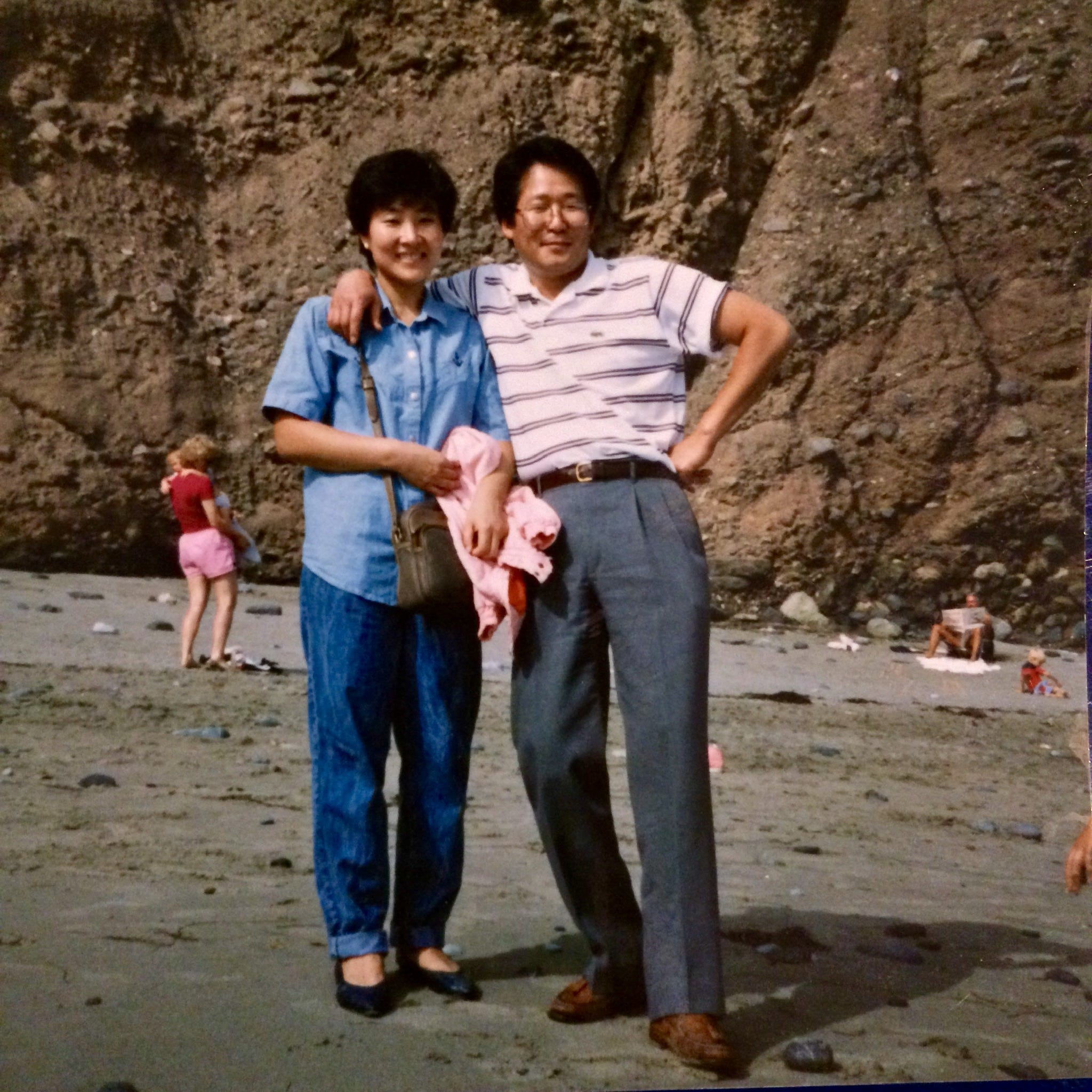
My parents are not great with money. Dad switches off between spending too much and too little. Mom feels, as a result, that she has to be the one squirreling away. Thus she’s loath to take risks and foregoes any payoff that might provide.
My parents ran blue collar small businesses together their entire careers. It feels absurd to call theirs a career though. They were struggling to materially survive (not in an emotional / psychological way). We were on food stamps for a couple years.
Once, my dad made a terrible financial choice during a family vacation. On the way home my sister and I were starving; we asked to stop at McDonald’s. Not even able to pay for two Happy Meals, he muttered, “Just hang in there, we’re almost there.” My dad would later tell us this was one of the most shameful moments of his life. He drove 80 miles an hour the whole stretch, burning road and heart.
Again, I didn’t inherit financial literacy from my parents. This is reality for most children of immigrants in America.
It’s really fucking hard to keep the lights on and food on the table when you don’t understand how a country and its populace operates. Racism is working against you quietly and loudly. The language still skews impenetrable, especially in a high stakes situation (anything having to do with money).
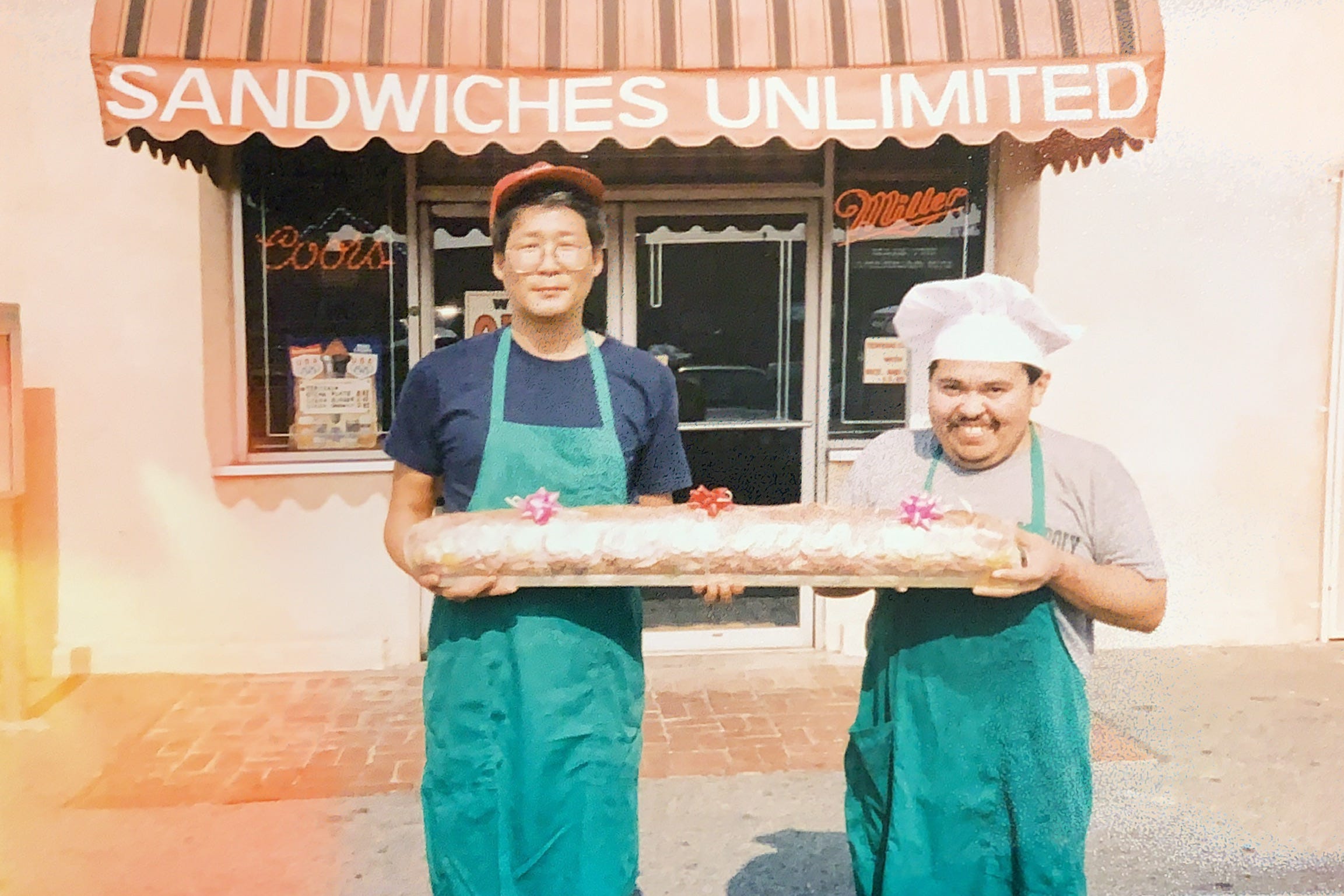
The feast-and-famine cycle of small businesses is very real for many. Some months, my dad made enough to cover us for six months. But then the fallow months stretched on too long, and you could cut the anxiety in the house with a hot knife.
When times were good, my dad would knock back a few Budweisers, beam at me and declare, “Do what you love, Eunhye-ya. Don’t chase money, it will run away from you. I didn’t move here to suffer and have you suffer as well.”
When times were bad, my mom would incessantly urge me to get a “government job“. I didn’t know what that was, just that I didn’t want one.
At my core, I am a feeling, rebellious, idealistic girl (mostly tamed at 41). Two years after graduating from college (during the Great Recession!), I chose to leave a very stable job at Samsung R&D Center in San Jose.
For art history grad school in New York City. My dad insisted I was insane. Who else do I know who made such a risky choice? Zero good Asian American children would do such a thing1. For that reason, I felt ashamed for a long time.
After four years of NYU’s higher-ed tuition and the cautionary tale of NYC’s cost of living, I had accrued $165,000 worth of student loan debt.
Did I mention curators — what I was studying to become — get paid in the low-to-mid five figures? Even the high up ones?
Meanwhile, my friends were going into that much debt, too. But for medical degrees and MBAs.
I resigned myself that I would not pay off these loans until I was in my 60s. Thanks to tons of luck, the goodwill of others, strategy and hard work, I can tell you that I paid the thing off in the spring.
Starting my own business in 2015 is one of the best decisions I’ve ever made. Because I now do what I’m uniquely suited to do and love, yes. But it has completely transformed my relationship with money, as well.
When you boss yourself around, you come into contact with all your shit, especially your money shit. There are zero people around to blame, so you have to face it.
If I have a bad month, it is 100% on me (although the economy for sure impacts it).
Like many high-achieving Millennial creatives, I had to break ceiling after ceiling that society installed over me. Not to mention being First Gen and financially illiterate.
But blaming the system constantly is a bad, counter-productive move2. At the end of the day, I had accepted those ceilings and found all kinds of conscious and subconscious ways to keep them in place.
Bottom to top, here’s how and why:
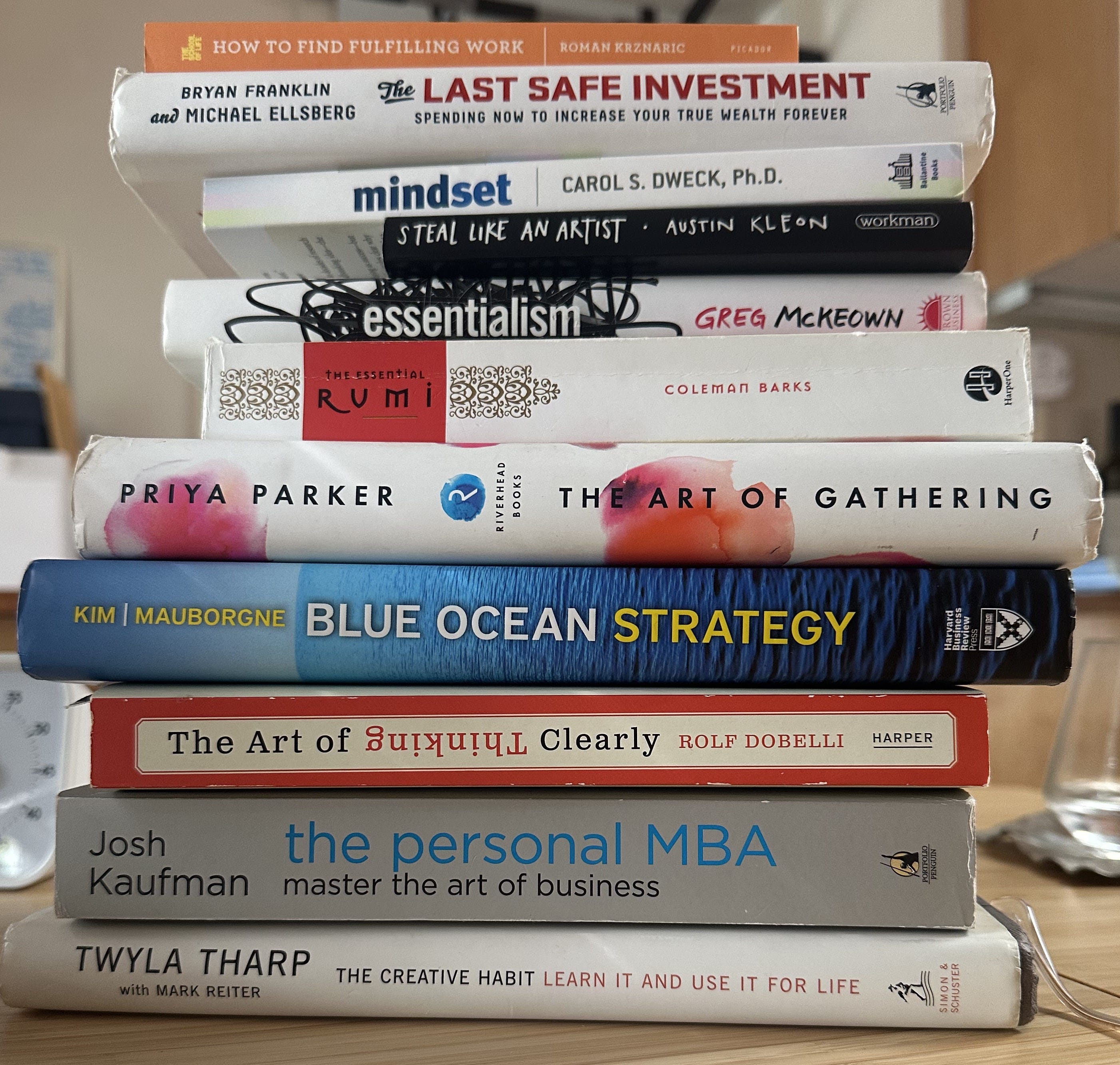
The Creative Habit by Twyla Tharp
Tharp is one of the most respected and decorated choreographers in American history.
I read Creative Habit when I first started as a coach; I use her ideas for myself and to help clients refine their practice (result being good outcomes, confidence, and booking more clients).
The Personal MBA by Josh Kaufman
Extensive, practical, in many ways probably more helpful than an actual MBA.
It’s hard to tell you how much money this tome has made me. Potentially responsible for empowering me to make most of it.
The Art of Thinking Clearly by Rolf Dobelli
Strong collection of all the cognitive biases that plague us all the time, and funny to boot! Helps me think better, and therefore run my coaching practice and business more smoothly.
Blue Ocean Strategy by Kim and Mauborgne
When you hear “you’re one of one” and “find your unique message and marketing” or “GTM Alpha”, they mean utilizing Blue Ocean Strategy to find your product / service (rather than swimming in a Red bloody Ocean of “competition”.
The Art of Gathering by Priya Parker
As far as I’m concerned, this book is the masterclass on how to create standout, worthwhile events. If you want or need a community as part of your offering, you must read this.
The Essential Rumi by Coleman Barks
I haven’t read this book in full, but enjoy flipping and landing on Rumi’s incredible poetry. The Guest House is a mantra for me.
I included it to be an emblem to represent all powerful spiritual texts. Choose any one you like and really read it.
I think when people talk about “having an edge over the competition”, ironically it means being whole hearted and spirited.
Essentialism by Greg McKeown
After finishing this book, I was a better traveler on the slipstream of time. Saying “no” thoughtfully and well can save you tons of time and money.
Steal Like An Artist by Austin Kleon
I’ve bought and gifted this book to so many people over the years. It’s a contemporary classic, far as I’m concerned. Kleon shares his brilliant rules of thumb and practices.
I hope you read it and trash any doubt you’re not an artist. And then SHRED the straight-jacket idea that you can’t make anything unless it’s “original” and “unprecedented”.
Mindset by Carol S. Dweck, Ph.D.
A bit academic, but just read it for the mindset shifts. The main one is there’s fixed mindset and growth mindset — moving over to growth is a lifelong practice.
Goes without saying a fixed mindset will not make you more money.
The Last Safe Investment by Bryan Franklin and Michael Ellsberg (linked here because bookshop.org doesn’t have it)
If you hesitate to pour money into your health, skill building, education, family and friendships, et al., this book is a must.
“Spend money to make money” has been true for me. You’re worth it, and so are the things you’re building.
How to Find Fulfilling Work by Roman Krznaric
When I was a miserable curator, this book grounded me and set me towards a better direction.
It has what many career change self-help books lack: philosophy and deeply thought-through wisdom and practice. Krznaric is a great lifestyle philosopher.
Here’s the list again so you need not scroll up:
The Personal MBA by Josh Kaufman
The Creative Habit by Twyla Tharp
The Art of Thinking Clearly by Rolf Dobelli
Blue Ocean Strategy by Kim and Mauborgne
The Art of Gathering by Priya Parker
The Essential Rumi by Coleman Barks
Essentialism by Greg McKeown
Steal Like An Artist by Austin Kleon
Mindset by Carol S. Dweck, Ph.D.
The Last Safe Investment by Bryan Franklin and Michael Ellsberg
How to Find Fulfilling Work by Roman Krznaric
What am I missing? Which books have made you money?
xo Kat
Nurses, doctors, lawyers, engineers, pharmacists, scientists, consultants, teachers (who would eventually enjoy a nice pension, or at least that was the idea)
Especially in the U.S., the social, legal and tax system of which handsomely rewards even a modicum of entrepreneurial streak.
Already started The Personal MBA
This piece and this list came at just the right time! It really resonated with me, and the book list is great! I've been on the hunt for things to read and to get some use out of my library. Thanks for all of this.